How to Run a Profitable Dropzone in 2026: Know Your Numbers, Set Clear Goals, and Stop Leaving Money on the Table
TL;DR
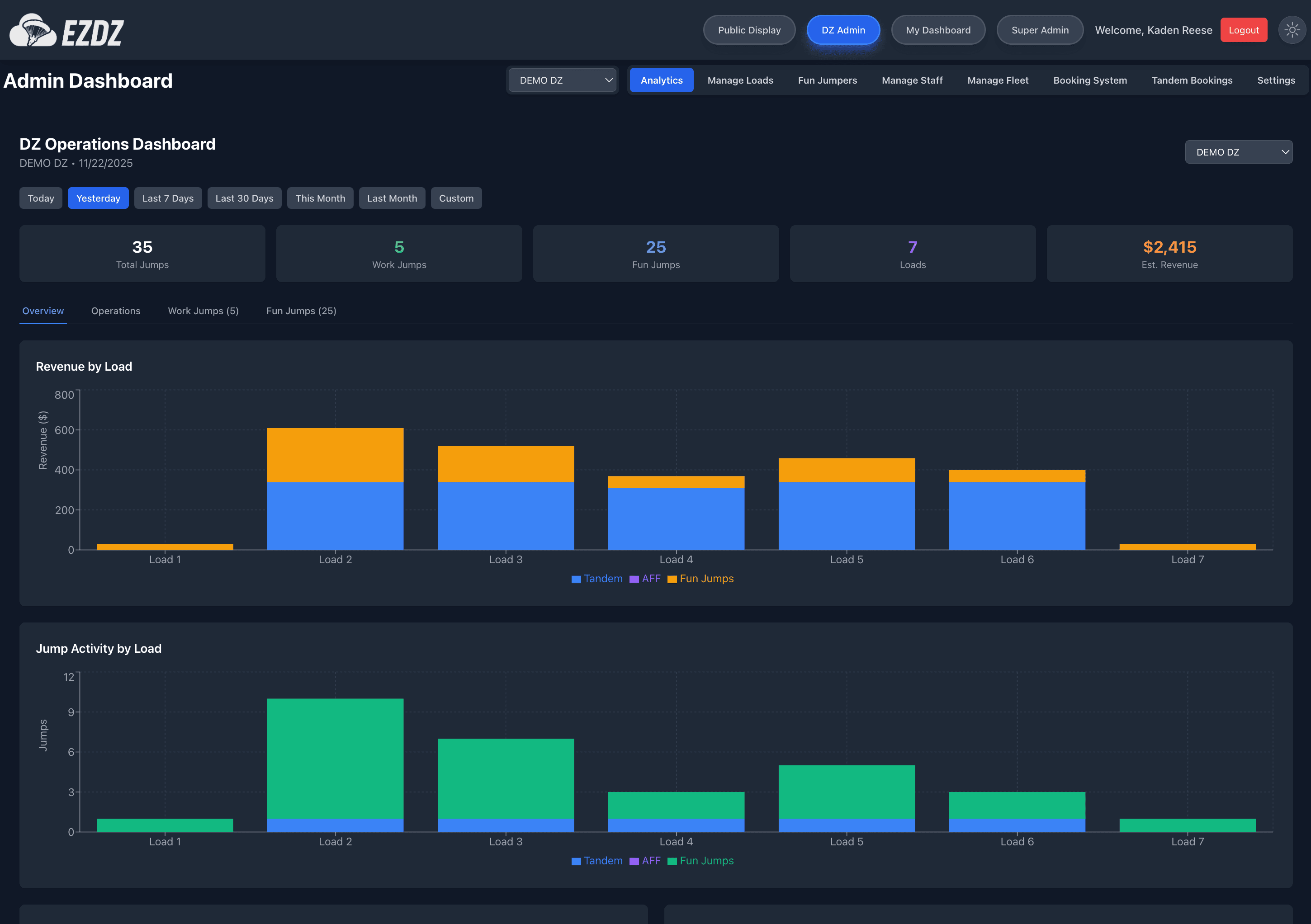
Profitable dropzones don't run on gut feel—they run on data. I've built businesses in real estate, helped scale a moving box company to millions in revenue, and now I'm building EZ DZ. The pattern is always the same: know your numbers, set clear goals, optimize operations, and stop underpricing your value. This post breaks down exactly how to do that for your dropzone, including the biggest operational wastes I've seen (hint: abandoned bookings with zero recovery is the easiest money you're not making).
From Real Estate to Moving Boxes to Dropzones: One Pattern Keeps Winning
I've built businesses in three different industries. The profitable ones all did one thing right: they treated operations like math, not magic.
In real estate, I learned that speed-to-lead beats perfect follow-up every single time. Agents would spend hours crafting the perfect email while someone who called back in 10 minutes closed the deal. Data won. Every time.
Then I spent time working side-by-side with a business owner scaling a moving box company—one of the most unglamorous products you can sell—to millions in revenue annually. Not because moving boxes are fancy. Because we obsessed over conversion rates, tracked which keywords performed, and built systems that worked while we slept. Operations and fundamentals mattered more than features.
Now I'm building EZ DZ, and I see the same patterns at dropzones. The ones that are profitable aren't running on luck or vibes—they're running on numbers. The ones struggling? They're making the same mistakes I've seen in every industry: no tracking, no goals, manual everything, and pricing based on "what everyone else charges" instead of actual cost plus desired margin.
Here's the thing: operations + numbers = profit. It doesn't matter if you're selling houses, moving boxes, or tandem jumps. The principles are the same. And in 2026, if you're still running your dropzone on gut feel, you're leaving serious money on the table.
The Problem: Running Blind
Let me ask you something: Do you know your real cost per tandem? Not the instructor rate and fuel cost—the actual all-in cost including gear depreciation, insurance per jump, marketing cost per booking, and overhead allocation?
Most dropzone owners I talk to don't. They know they're "doing okay" or "breaking even" or "making money in summer," but they can't tell me the numbers. And if you don't know the numbers, you can't improve them.
Here's what I see at most dropzones:
- **No conversion rate tracking:** You know how many bookings you completed, but you have no idea how many inquiries came in, how many started the booking process but abandoned, or which marketing channels are actually driving revenue.
- **Pricing based on competitors:** "We charge $200 because that's what the other DZ 50 miles away charges." But you don't know if they're profitable either, and you definitely don't know if your cost structure is the same.
- **Manual processes everywhere:** Handwritten load boards, phone tag for bookings, paper waivers, manual tracking of reserve repack dates. Time you could spend talking to customers or optimizing operations is spent on administrative busywork.
- **Zero abandoned booking recovery:** I've tested booking systems at multiple dropzones. Not ONE sent me a recovery email when I abandoned my cart. In e-commerce, 30-minute cart recovery is standard. Amazon does it. Shopify does it. Every online store does it. But dropzones? Nothing. You're leaving thousands on the table.
Let's do some math. If you're completing 50 tandem bookings per week during peak season, and industry-standard cart abandonment is 60%, that means 75 additional people started your booking process but didn't finish.
At $200 average booking value, that's $15,000 per week in abandoned bookings. You don't even know these customers exist because your system never captured the abandonment event. Over a 20-week season? That's $300,000 in lost opportunity that you're not tracking, not measuring, and definitely not recovering.
Want to see how much you're losing to abandoned bookings? Use our Lost Booking Revenue Calculator to calculate your actual number. Most dropzone owners are surprised when they see it.
Pillar 1: Know Your Numbers
In the moving box business, we tracked conversion rate religiously. Not just "how many sales did we close," but conversion at every stage: ad impression to website visit, visit to add-to-cart, cart to checkout, checkout to purchase. We tracked which keywords performed, which ad copy converted, which landing pages drove revenue.
That data informed everything. When we knew that "commercial moving boxes" converted at 8% vs "office moving supplies" at 3%, we could allocate ad spend accordingly. When we saw that cart abandonment happened most often at the shipping cost reveal, we tested free shipping thresholds. The business scaled because decisions were data-driven, not gut-driven.
Dropzones need the same discipline. Here are the numbers you should know cold:
- **Real cost per tandem:** Pilot time, instructor rate, fuel for that load, gear depreciation per jump, insurance cost per jump, marketing cost per booking (total marketing spend ÷ bookings), overhead allocation (rent, staff, admin divided by total jumps). Add it up. That's your floor. Everything above that is profit.
- **Revenue per load:** Not just how many tandems you did, but the mix. Three tandems at $200 plus two fun jumpers at $30 = $660 per load. If that load took 45 minutes ground time and you're doing 8 loads per day vs. 6 because of efficiency, that's two extra loads = $1,320 more per day = $26,400 more per 20-day month.
- **Conversion rate at every stage:** Website visitors who submit inquiry form = inquiry conversion. Inquiries who start booking = booking start rate. Booking starts who complete payment = completion rate. Completed bookings who show up = show-up rate. Track each one. Improve each one by even 5% and you'll see massive compound gains.
- **Marketing ROI by channel:** Google Ads driving bookings at $35 cost per booking vs. Facebook at $67 vs. organic at $8 (just your time)? Double down on what works. Cut what doesn't. Most dropzones spread budget evenly across channels without knowing which ones actually drive revenue.
You can't improve what you don't measure. In real estate, I learned this the hard way. I was spending time on activities that felt productive (open houses, cold calling expired listings) when the data showed 80% of my closed deals came from referrals and online leads. Once I saw the numbers, I reallocated my time. Revenue doubled.
Same principle applies to dropzones. Start tracking these numbers this month. You'll immediately see where your leverage points are.
Pillar 2: Set Clear Goals (Then Track Against Them)
Real estate taught me goal-setting discipline. You can't just say "I want to make more money." You need specific, measurable targets with timeframes: 12 closed transactions this quarter, 4 new listings per month, $180K gross commission income this year.
Goals without data are just wishes. Data without goals is just noise.
For dropzones, clear goals look like this:
- **Revenue targets:** Not "we want to have a good summer" but "$280K in tandem revenue this season" broken down to monthly and weekly targets. $14K per week means 70 tandems at $200. Now you know exactly what you're aiming for and can measure progress weekly.
- **Load efficiency goals:** Currently doing 6 loads per day with 45-minute ground time. Goal: 8 loads per day with 35-minute ground time. That's 33% more capacity without adding aircraft or pilots. Measure ground time per load. Track it weekly. Find bottlenecks. Optimize.
- **Booking goals by source:** 400 tandems from organic search, 200 from Google Ads, 150 from social, 100 from referrals. Now you know where to focus marketing effort and can measure ROI by channel.
- **Customer acquisition cost targets:** If you're spending $8,000 on ads to generate 200 bookings, that's $40 per booking. If your net profit per tandem is $120, you're 3x CAC which is healthy. If it's only $50, you're in trouble. Set a target (e.g., CAC below 30% of net profit) and track it monthly.
Here's what happens when you set clear goals and track progress: behavior changes. Your staff knows the target. Your manifest team understands that reducing ground time matters. Your booking desk sees conversion rate as something to improve, not just a number.
In the moving box business, once we set clear weekly revenue targets and displayed them publicly (a dashboard everyone could see), the team started problem-solving autonomously. "We're at $47K this week and target is $60K—what can we do to close the gap?" That kind of ownership only happens when goals are clear and progress is visible.
Pillar 3: Pricing Is Stuck in the Past (And It's Costing You)
Let's talk about something uncomfortable: tandem pricing hasn't kept up with inflation.
Over the last five years, nearly every other industry has seen 30%+ price increases. Airlines, hotels, restaurants, entertainment—all up significantly. Even fun jumper ticket prices have increased at most dropzones. But tandem prices? In many markets, they've actually decreased to "stay competitive."
Meanwhile, your costs have gone up. Fuel, insurance, instructor wages, gear, maintenance—all higher than they were five years ago. So you're charging the same (or less) while your costs are up 20-30%. That's a margin squeeze.
Here's the math. Let's say you did 500 tandems last year at $200 each. That's $100,000 in tandem revenue. Now let's say you raise prices to $220 (a $20 or 10% increase) and you lose 5% of customers due to price sensitivity. You'd do 475 tandems at $220 = $104,500. Net gain: $4,500.
But here's what most dropzone owners miss: you probably won't lose 5% of customers. Why? Because customers aren't buying a commodity—they're buying an experience. And experiences have value that goes way beyond the sticker price.
Think about it: someone who's going to jump out of a plane at 14,000 feet isn't making that decision based on saving $20. They're making it based on trust, professionalism, and confidence that you'll keep them safe. If anything, a slightly higher price signals quality and investment in safety.
Here's how to frame pricing increases as value increases, not just cost increases:
- **Professional booking system:** Automated confirmations, reminders, easy rescheduling—these aren't just conveniences, they're trust signals. A customer who gets instant confirmation email feels more confident than one who doesn't hear back for 6 hours.
- **Better customer experience:** Real-time availability, 24/7 booking, no phone tag—these are worth money. Compare your booking experience to the best e-commerce sites. If you're offering that level of experience, you can charge for it.
- **Operational investment:** New gear, more training, better facilities—all of these cost money. Customers understand that quality costs more. Position your pricing as reflecting your investment in their safety and experience.
- **Platform fees are now standard:** Every industry passes on booking fees, platform fees, convenience fees. Amazon does it. Airlines do it. Ticketmaster does it. Restaurants do it (third-party delivery fees). Consumers are used to it. EZ DZ allows you to pass on platform fees transparently, meaning your net cost can be zero. It's not nickel-and-diming—it's industry standard.
Would you rather do 100 tandems at $200 or 95 tandems at $220? The second option makes you more money ($20,900 vs. $20,000) with less wear on your gear and team. That's the math most dropzone owners don't do.
Calculate your ROI from a $20 price increase. Use our ROI Calculator to see exactly how pricing changes affect your bottom line.
Pillar 4: Operational Waste = Hidden Profit
The biggest profit improvements don't come from working harder—they come from eliminating waste. Here are the three biggest operational wastes I see at dropzones, ranked by revenue impact.
**Waste #1: Abandoned Bookings with Zero Recovery (The Biggest One)**
I've personally tested booking systems at multiple dropzones. I'd start a booking, add a tandem and video package, enter my info, get to the payment screen—and then close the tab. Know how many dropzones sent me a recovery email? Zero. Not one.
In e-commerce, 30-minute cart recovery is absolutely standard. You abandon your cart on Amazon, Shopify, any online store—you get an email within 30 minutes with a direct link to complete your order. Industry average recovery rate is 10-15%.
Let's do the math. Say you get 100 booking starts per week, and 60 complete (40% completion rate, which is typical for dropzones without optimization). That's 40 abandoned bookings. At $200 average, that's $8,000 per week in abandoned bookings.
Now add automated cart recovery that captures even 10% of those (a conservative estimate). That's 4 additional bookings per week = $800/week = $3,200/month = $9,600 over a 12-week season. And you didn't spend a dollar on ads or do any extra work—the system just sent an email.
This is the easiest money you're not making. Period.
**Waste #2: Manual Load Board (Time + Trust)**
Handwritten load boards feel old-school and authentic, and I get the appeal. But here's what they actually cost you:
- **Time:** Writing out each load takes 2-5 minutes. Multiply that by 8 loads per day = 16-40 minutes per day of manifest staff time. That's time that could be spent talking to customers, upselling video packages, or just not standing at a whiteboard with a marker.
- **Errors:** Wrong weights written down, missed reserve repack dates, expired currency checks—these happen with manual systems. A digital manifest catches these automatically. One missed currency check that results in a refused load costs you $600+ in lost revenue for that slot.
- **Professionalism:** When tandem students walk into your dropzone and see a handwritten whiteboard vs. a professional digital load board, which one inspires more confidence? Which one signals that you've invested in modern systems? First impressions matter, and looking professional drives bookings. Trust drives revenue.
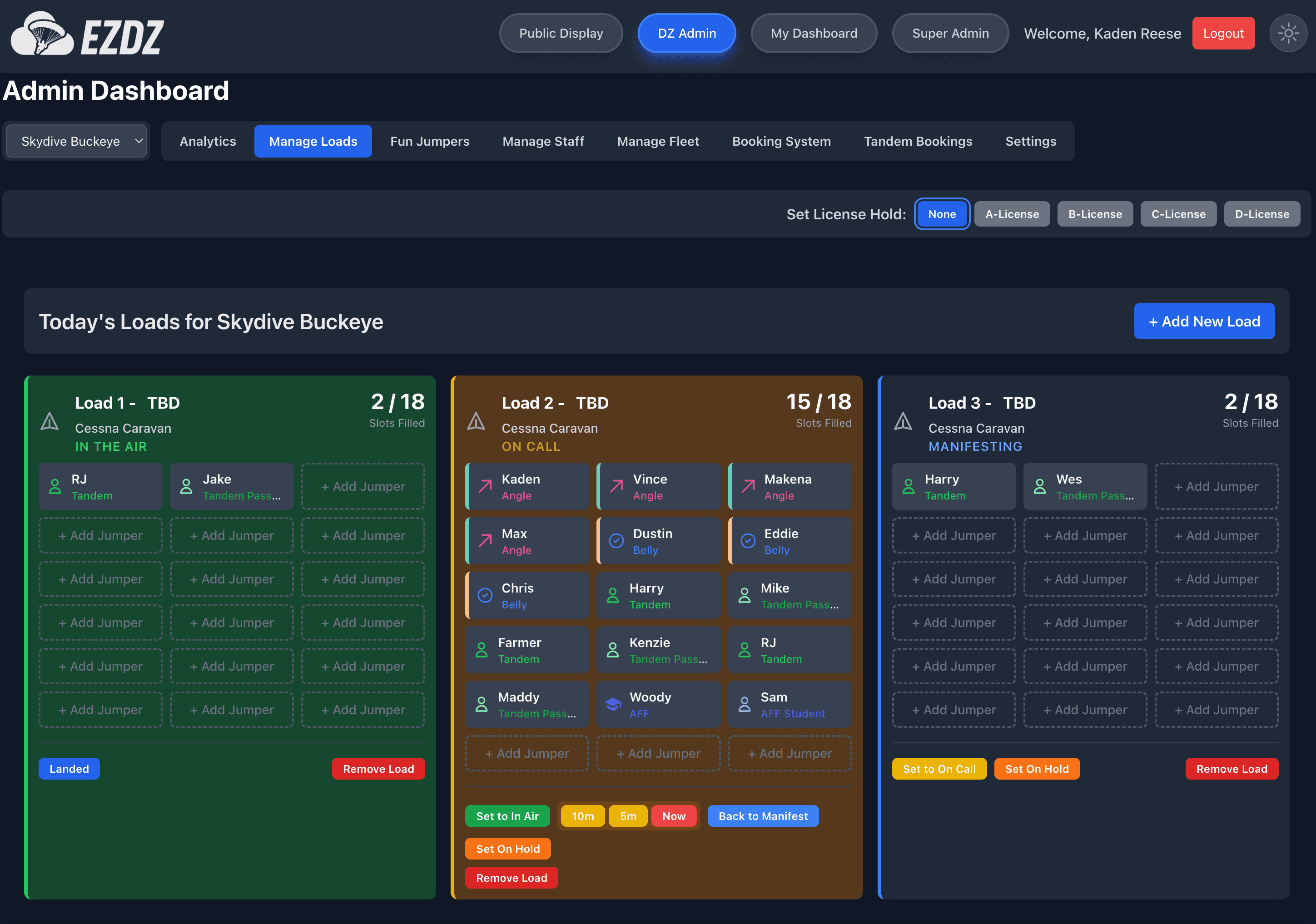
Switch to a digital manifest system and you'll save 20+ hours per month of staff time, reduce errors, and look more professional to customers. That's a triple win.
**Waste #3: Phone Tag for Bookings (Lost Revenue + No Data)**
Every hour your staff spends on the phone with booking inquiries is an hour they're not doing something else. And for every call you take, there are 3-5 calls you missed because you were busy, it was after hours, or your phone was off.
Those missed calls are lost revenue. Someone searching for "skydiving near me" at 9pm can't book with you if you only take calls during business hours. They'll book with whoever has online booking—and that's revenue you'll never see.
Plus, you have no data. You don't know how many inquiries came in, which ones converted, where they came from, or what the conversion rate is. You're flying blind.
Automated 24/7 online booking solves all of this. Customers book when they're ready (not when you're available), your staff time is freed up for higher-value activities, and you capture data on every inquiry, every booking start, and every abandonment. That data is what lets you optimize.
How Software Enables This (But You Don't Need EZ DZ to Start)
I built EZ DZ because I saw these problems firsthand and wanted to solve them. But here's the truth: the principles work regardless of what software you use.
What matters is that you have systems for:
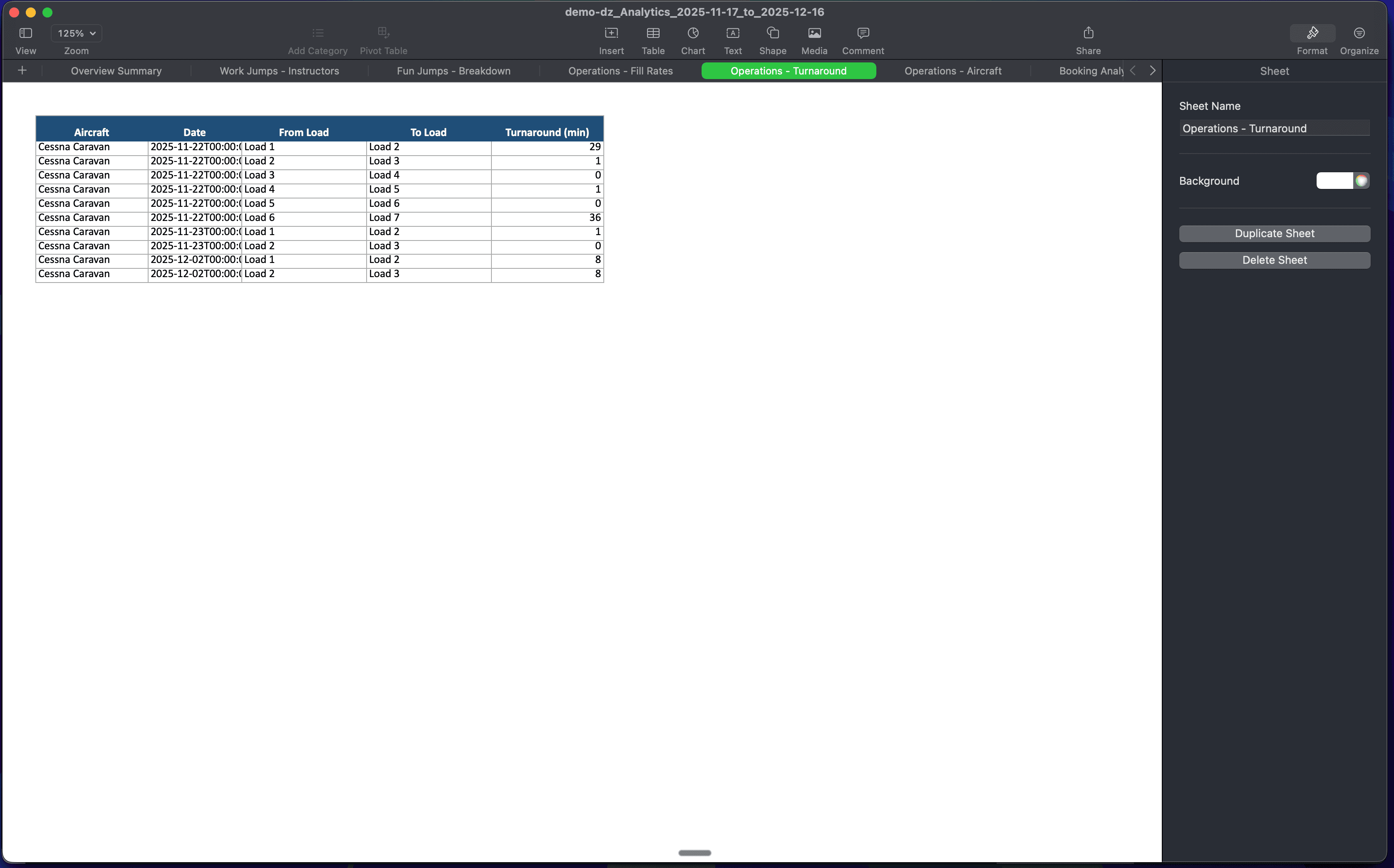
- **Analytics for knowing your numbers automatically:** Digital systems track everything—booking starts, completions, abandonments, revenue by package, conversion rates by source. You can't improve what you don't measure. Even if you use spreadsheets, USE SOMETHING. Track your numbers weekly.
- **Automation for efficiency:** Automated booking confirmations, reminder emails, cart recovery, currency expiration alerts—these run 24/7 without you touching them. In the moving box business, we automated order confirmations and saw no-shows drop 40%. Same principle applies to skydiving.
- **Real-time data for decision-making:** When you can see real-time booking trends, you can adjust on the fly. Slow week coming up? Run a promotion. Strong demand? Raise weekend pricing. This only works if you have visibility into what's happening right now, not last month.
- **Professional appearance = customer trust:** Modern booking systems, digital manifests, instant confirmations—these signal competence and investment in quality. Customers feel more confident booking with dropzones that look professional. And confidence drives bookings.
This is why I built EZ DZ—to give dropzones the same operational advantages that scaled businesses in other industries use every day. Real-time analytics, automated cart recovery, digital manifest with reserve tracking (license & rating tracking coming soon), and marketing automation that runs while you sleep.
But even if you use spreadsheets, the principle is the same: build systems that track, measure, automate, and give you visibility. Manual processes don't scale. Gut feel doesn't compound. Data does.
Where to Start: Pick One Thing
Don't try to fix everything at once. That's how you get overwhelmed and do nothing.
Instead, pick ONE metric to track this month. Here are your options:
- **Conversion rate (inquiry to booking):** Start tracking how many people inquire vs. how many actually book. If you're at 30%, that's your baseline. Now you can test improvements (faster response time, better booking flow, etc.) and measure impact.
- **Abandoned bookings:** If you have any kind of online booking, start tracking how many people start but don't finish. Just seeing the number will shock you. Then add cart recovery and measure how many come back.
- **Cost per tandem:** Calculate your all-in cost for one tandem jump. Pilot, instructor, fuel, gear, insurance, marketing, overhead—add it all up. That's your floor. Everything above that is profit. Now you know if your pricing makes sense.
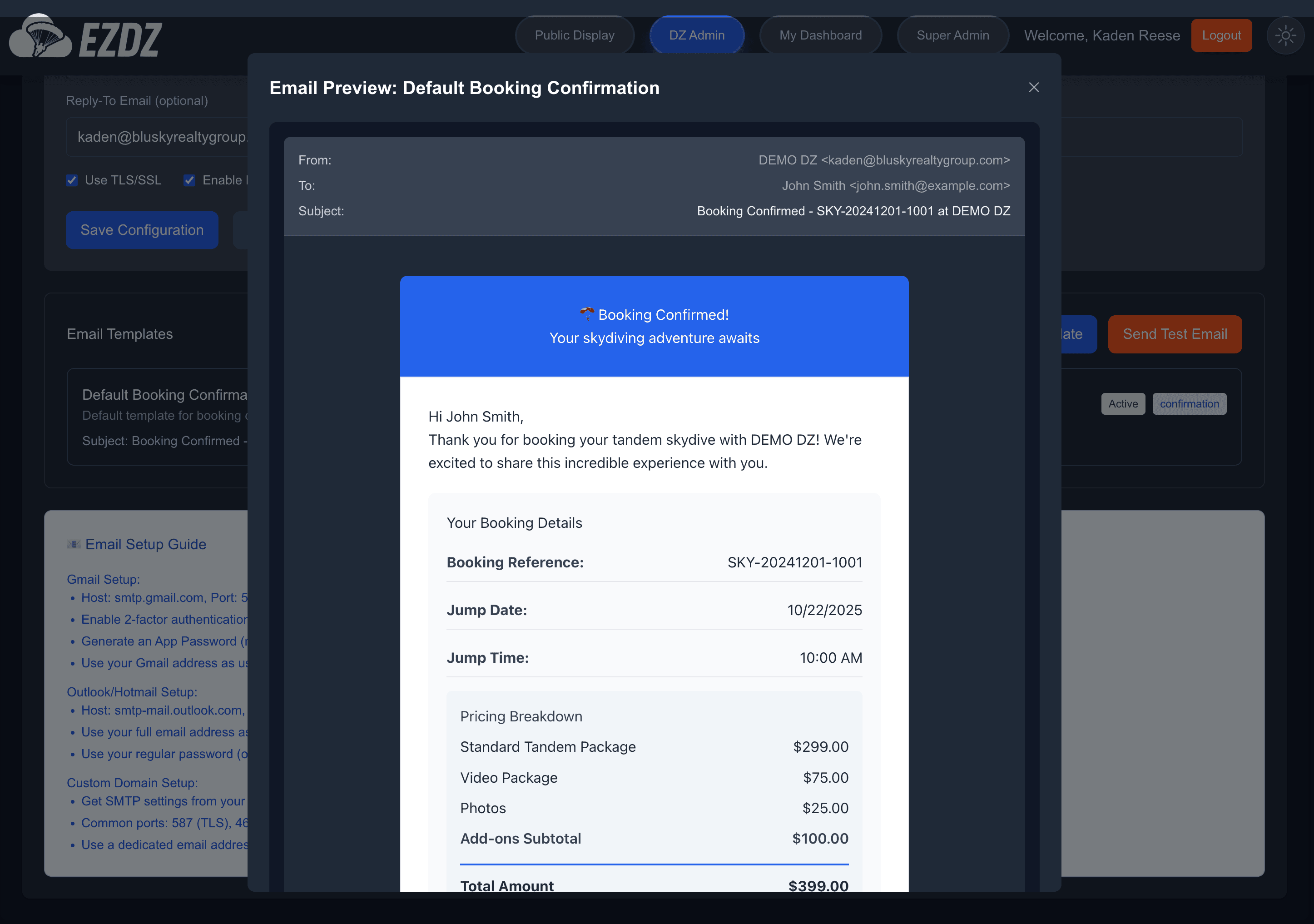
- **Revenue per load:** Track the revenue for each load you run for one week. Average it out. Look for patterns. Are tandems-only loads more profitable than mixed loads? Do certain times of day yield higher revenue? Use that data to optimize scheduling.
Pick one. Measure it for 30 days. Make ONE improvement based on what you learn. Repeat.
That's how you build a data-driven operation. Not overnight. One metric, one improvement, one month at a time.
Ready to Stop Running Blind?
EZ DZ was built to give dropzones the operational systems that scaled businesses in other industries use every day. Real-time analytics, automated cart recovery, digital manifest, marketing automation—all in one platform. Zero setup fees. No long-term contracts. Start free and only pay when you get paid.
Get started and see your numbers clearly for the first time, or reach out if you want to talk through your specific situation. I'm still the founder answering messages at midnight because I care about helping dropzones grow. Let's build something better together.